Rol
Co-lead engineer (with Berk Can Akbaba)
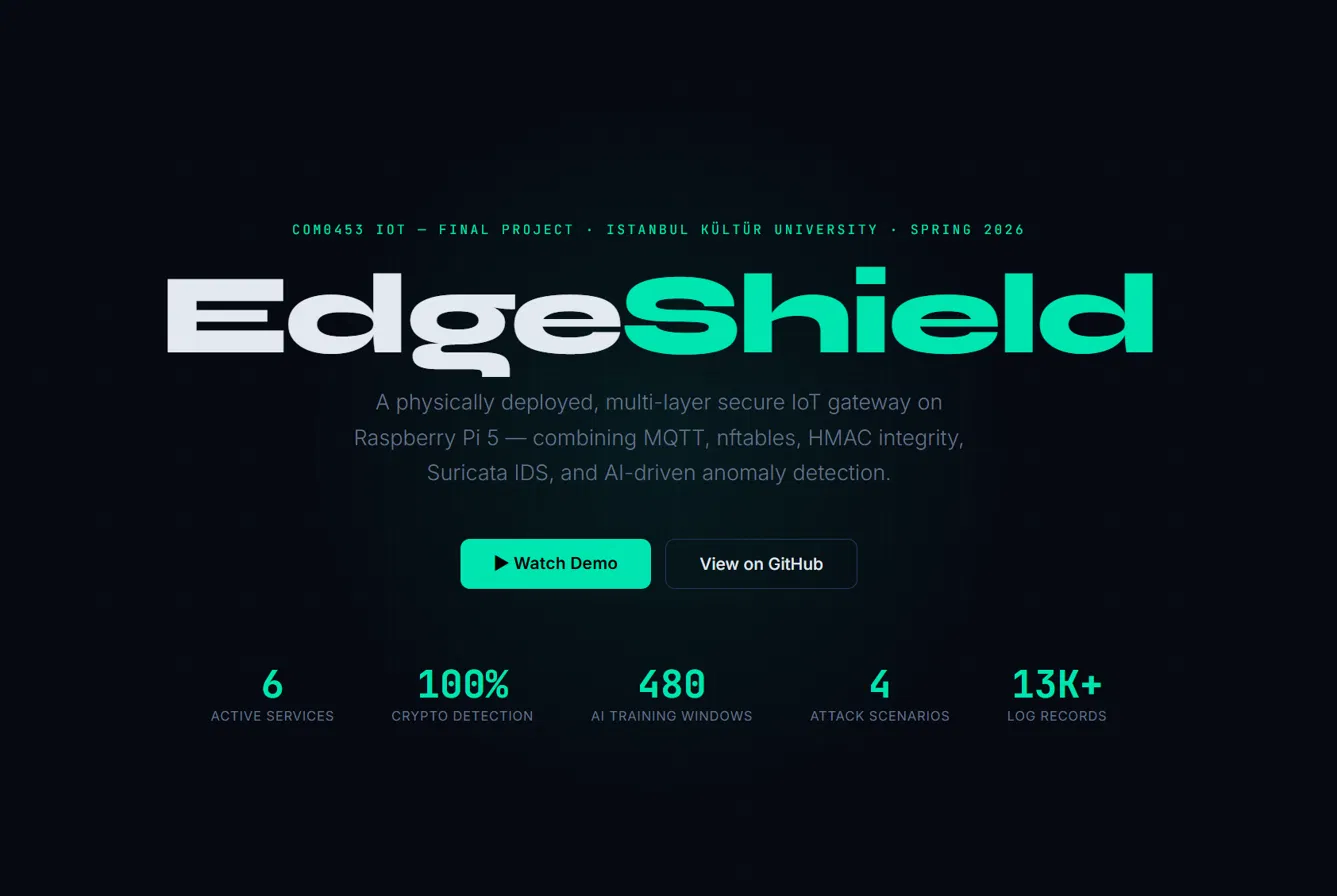
Fiziksel bir Raspberry Pi 5 ağ geçidi: kriptografik kontrollerin yakalayamadığını — davranışsal anomalileri — gözetimsiz bir makine öğrenmesi katmanı yakalıyor. Altında TLS taşıma, HMAC mesaj bütünlüğü ve yeniden oynatma koruması var; hepsi açılıştan itibaren çalışıyor.
2016'daki Mirai botnet'i yüz binlerce IoT cihazını ele geçirdi — kameralar, termostatlar, yönlendiriciler — çünkü bu cihazların uçta ciddi bir savunması yoktu. Aradan on yıla yakın süre geçti; çoğu IoT kurulumu hâlâ ağa güvenip en iyisini umuyor.
Projenin kapsamı, gerçek bir uç cihazda çalışan bir katmanlı savunma kurmaktı: güvenlik duvarı, şifreli taşıma, mesaj bütünlüğü, yeniden oynatma koruması, saldırı tespiti ve anomali tespiti — hepsi bir arada ve tekrar üretilebilir biçimde.
Saldırı tatbikatı temiz çalışıyor. Yeniden oynatma denemeleri bir saniyenin altında, denetim kaydıyla birlikte reddediliyor. HMAC'i bozulmuş veriler veritabanına hiç ulaşmıyor. Anomali enjeksiyonu bilinçli olarak ince: HMAC doğru, sinyal gücü sabit, yalnızca paket hızı yükseliyor — ve Isolation Forest bunu yakalıyor. Etkilenen sensörün anomali puanı ~0,26'dan ~0,11'e düşerken diğer sensörler normal bantta kalıyor. Hepsi Grafana panellerinde, zaman damgasıyla eşleştirilmiş halde görünüyor.
Projenin değeri tek bir bileşende değil; bunların hepsi bilinen teknikler. Değer bileşimde: 80 dolarlık bir kartın, doğru yapılandırıldığında, bütün bu güvenceleri aynı anda ve açılıştan itibaren, sahada ayakta kalacak biçimde uygulayabildiğini göstermek.
Tüm kaynak kod ve proje sitesi.
GitHub Project site →